
Directing and Leadership: Creating an Exceptional Customer Experience
What Could a Business Leader Learn from a Theatre Director — Through the Perspective of Andrus Kotri?
Andrus Kotri is a leading specialist in customer experience development.
Commented version of the article published in Äripäev in 2024.
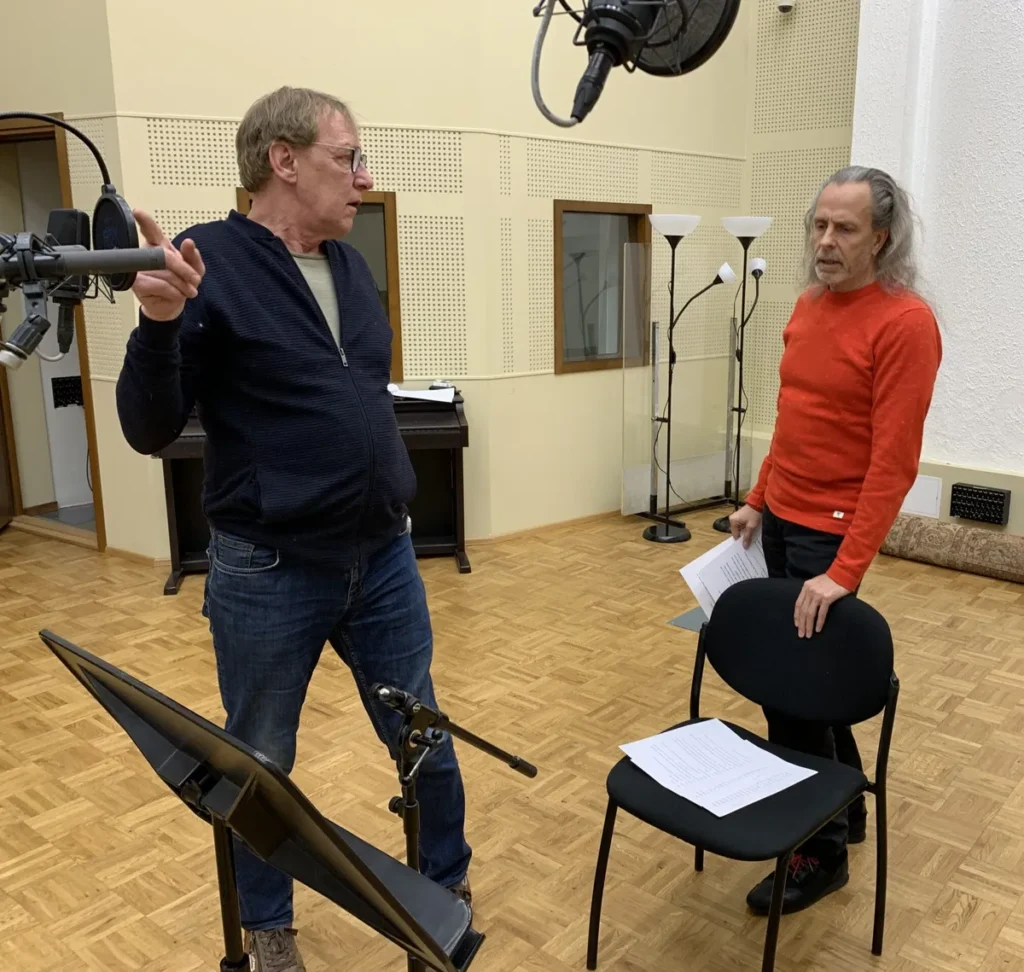
How can organisations ensure that the people interacting with customers work with the same inspiration and commitment as actors on a theatre stage creating a theatrical experience? This was the question on my mind when I enrolled in the directing course at Claresis Theatre School.
Below, I share some of the insights that emerged during the course and that can be applied practically within organisational leadership — all in the service of creating an outstanding customer experience and earning applause from clients.
Andrus Kotri
A company that seeks to create a meaningful customer experience is, in many ways, creating an imaginative world — much like theatre.
Most consumer-oriented companies today create imaginative value. Why else would consumers be drawn to an “Italian restaurant”, “Muhu bread”, a luxury hotel, or sportswear carrying the slogan “Just do it!”? These largely imagination-based elements generate real value for customers — otherwise people would not be willing to pay two or three times more than for a standard alternative.
Companies, however, tend to approach their services and products mechanically, treating “quality” rather than the imaginative dimension as their main competitive advantage and motivating factor for customers. As a result, internal processes are usually designed to produce measurable and standardised quality, rather than to build an imaginative experience — an area in which leaders often lack sufficient knowledge.
Yet it may be precisely the principles of directing and performance-making that allow the imaginative dimension to be developed with the same degree of structure and intentionality as other measurable processes within an organisation.

Creating an explication helps establish clarity and structure — while also answering the essential questions: What are we doing here, why are we doing it, and how?
The purpose of the explication created by the director — an analytical description of the production — is first and foremost to articulate the “imaginative meaning” of the performance: its message, the logic of events emerging from it, and the functions of the different roles within it. What is happening on stage, and why?
In a similar way, organisational and customer-service leadership can also develop a coherent and logically connected framework that helps align people around a shared purpose and direction. Without such a framework, service employees tend either to a) follow procedures mechanically, or b) rely solely on their personal intuition when interacting with customers.
As a rule, this leads to customer interactions that feel weak, generic, or uninspired, while the real strengths of the company’s value proposition fail to emerge.
Most companies do have a strategy, as well as technical descriptions of their products and services. What is rarely examined in depth, however, is the underlying motivation behind why customers actually choose those products — especially the deeper psychological mechanisms involved: emotions, thoughts, social belonging, self-realisation, and imagination.
What is often missing is an explication of how employees, through their behaviour, create, amplify, and support these emotional, social, and other non-technical needs that customers carry with them. As a result, a gap emerges between the expectations of the consumer and what the service employee or salesperson actually provides.
Every performance carries a subtext — just as every service does.
Companies rarely speak explicitly about the subtext of a product or service. People tend to hold very different understandings of it. As a result, many employees struggle to truly engage and begin “delivering results”, because they fail to grasp the unwritten logic that actually makes the organisation function. Clarifying and continuously reflecting on this should be a conscious part of organisational culture. What is our message?
Most companies ultimately want customers to spend money on their products or services. Far less attention is given to meaning: why should a customer exchange their money for what we offer? Why is our product genuinely valuable, and what must we do so that the customer is able to perceive and experience this value?
And beyond technical quality, what should we improve within the “imaginative” dimension of the experience in order to create even greater value for the customer?
Most contemporary products and services are purchased on the basis of emotional motivations. Very few products are chosen purely through practical reasoning alone, and can therefore be successfully sold relying only on rational logic.
For an actor to embody a character, they must understand how that character came into being.
Clarifying the background of one’s role helps employees better understand their responsibilities within service situations and respond accordingly.
In customer service, small yet important actions are often neglected because of “role confusion” — even though these details may carry great significance for the customer’s overall experience.
For example:
- Why should one stand up to greet a customer — even if it feels inconvenient
- Why should one genuinely be pleased to see a customer arrive, even if they enter five minutes before closing time?
Experience shows that mechanical rules, commands, and prohibitions are often insufficient for achieving the desired result.
To choose customer-oriented behaviour in such “dilemma” situations, employees need to understand a certain narrative. Why should they behave this way? Who exactly are they expected to be in these situations? What principles should guide them?
It is worth considering what kind of story organisations actually create for service and sales employees through performance metrics, bonus systems, and various rules. For example, if a salesperson’s compensation is tied solely to sales results, the organisation will most likely create a “sales wolf” — someone who does not sufficiently consider whether the customer will remain satisfied a few months later, or whether the customer will continue to trust the company in the future. Because the “afterwards” simply does not belong to that person’s story.
Every character has a central objective and line of action — just as every good service professional does.
In customer service, it is often difficult for a new employee to understand what exactly they are expected to create — and how — in terms of shaping an imagined experience and emotional atmosphere for the customer.
Managers usually do not have much time for extensive staff training, and explanations from colleagues tend to vary greatly. Process manuals may explain what to do, but even in the best cases they rarely clarify the finer details — and they almost never address emotions or motivations. The same applies not only to customer service staff, but to every member of the team: everyone must collectively understand and share the value and message the organisation is trying to create.
An actor in theatre requires precisely this kind of shared understanding and works seriously towards understanding how their character contributes to the larger whole and what their true task is within the story. In a similar way, organisational leaders should help employees understand the company’s value proposition and the role each individual plays in evoking the desired emotional experience.
In other words, a service employee should be able to understand and communicate the “subtext” alongside the product description itself. They should be able to read between the lines. And what is written between those lines should connect to the needs of the customer while reflecting the company’s unique competitive position.
The actor — and equally the employee — must be involved in developing the final solution. The director or leader alone cannot achieve the best possible result.
In customer service, it is often difficult for a new employee to understand what exactly they are expected to do in order to create a particular emotional atmosphere or imagined customer experience.
When observing a service interaction from the outside, we often see and hear behaviour that feels “out of place”. At best, this leaves the customer slightly confused; at worst, it may result in a formal complaint. One reason for such failures is the employee’s lack of genuine motivation in the moment.
The service employee no longer makes the effort to act according to the demands of the role — even at an “80% level” — and instead allows their ordinary personal mannerisms and moods to dominate the interaction. In doing so, they forget both the role itself and the behaviour that the situation requires.
Tamur Tohver:
“It is encouraging to see that the connection between directing and organisational leadership has begun to enter the world of business. In reality, however, this is not a one-way relationship. Directors have just as much to learn from entrepreneurship, team leadership, and coaching. In both my doctoral research and this course, I address precisely these intersections.
What emerges here is an interesting dynamic — one that supports creative practitioners while also inspiring organisational teams. Business thinker and multimillionaire Robert Kiyosaki expressed this well in relation to horizontal leadership: find strong partners who are themselves entrepreneurs, not merely employees. The same principle applies in theatre — everyone involved is equally creative, and the visionary leader-director is not, in essence, simply their employer.
What is the difference between an employee and an entrepreneur? You cannot lead another entrepreneur in the same way you direct your salaried staff. What Kiyosaki does not explicitly say, however, is that employees often lack a deeper vision of where the organisation is heading. Actors — and fellow entrepreneurs — are different in this respect. They are highly aware of their own vision.”
At the same time, it would be naïve to assume that leaders are unaware of the actual level of commitment within their teams. More often, leaders find themselves struggling with a different question: how can this be improved — and in what way?
Here, the analogy with directing becomes useful. It helps us understand how high the normal level of commitment and embodiment within a role must be in order to create an outstanding experience. If that level remains too low, it makes little sense to expect an exceptional customer experience in return.
Among leaders traditionally focused on “standardised quality”, there is a widespread belief that if organisational processes — or even detailed scripts — are defined precisely enough, employees will automatically behave accordingly. What is often forgotten, however, is that every service employee arrives as a human being, carrying personal beliefs, interpretations, and a desire to express something of themselves in their work — if only to avoid feeling like a robot and to remain alive and present within the role they perform.
Through the lens of theatre, it becomes easy to understand where this leads. If actors are harmed through rigid process control, excluded from participation, or prevented from bringing their own creative energy and understanding into the work, the result is an inauthentic — even embarrassing — performance for the audience.
And yet many leaders still believe in a purely mechanical approach to customer service and see no need for anything beyond it. Whether this means allowing employees a degree of freedom, involving and encouraging them, or creating shared responsibility through collective analysis of situations and joint planning — these dimensions are often neglected, despite being essential for genuine engagement and meaningful performance.
A strong actor — and equally a strong service professional — enters the role so fully that roughly 80% of their awareness is devoted to the character or function they embody, while only 20% remains centred on themselves as a private individual.

Here the actor is supported by the super-objective — what the character ultimately wants, what their deeper aim is.
A second obstacle, alongside insufficient commitment, may be that the leader has failed to make clear what kind of role the employee is actually expected to fulfil in different situations — and how the employee’s behaviour supports the organisation’s value proposition. Too often it is assumed that employees will somehow intuit the correct behaviour from fragmented instructions alone.
Leaders may create product descriptions, process manuals, and service standards, yet fail to create descriptions of the actual character or role employees are expected to embody, or an understanding of which emotions and messages generate the greatest value for both customer and company.
Tamur Tohver:
“While performing, the actor does not consciously think about all of this. Once they understand the central message of the production and their role in conveying it, they simply focus, moment by moment, on solving the immediate and smallest task facing the character: how to overcome obstacles and achieve their objective. Within the context of the production, this becomes the actor’s personal message. And even this is no longer consciously repeated in every moment — it gradually becomes part of the actor’s way of being, a mission embodied within the role itself.
One may then ask: should a postal worker have a mission? If the people who created this website had not worked with a sense of mission, what would exist here instead would probably be nothing more than a disorganised collection of hectic thoughts. Yet the ideas presented here reach the reader systematically, making communication easier and clearer.
The same applies to every profession — once we stop relating to it merely as paid work, even when it technically is. It is always possible to discover a message and, from that, a super-objective. Wishing you joy in discovering yours.”
70% of a production’s success is determined by the casting of the actors — just as the quality of customer experience largely depends on the selection of the right service people.
Not every actor’s background or innate qualities are suited to every role. Directing experience repeatedly demonstrates that the “mechanical” attempt to change or develop an actor — or employee — is often ineffective.
To create the desired experience in customer service, organisations must find people who already possess certain natural predispositions for the role. Consider, for example, the difference between selling pleasure-oriented luxury goods versus fast food, or working within a high-speed retail environment versus a hotel experience centred around rest, care, and relaxation.
From a human perspective — and according to many leadership theories — managers often tend to overlook the fact that some employees are simply unable to deliver the intended customer experience, hoping that additional conversations and training will eventually solve the issue. Experience from theatre, however, suggests that this is often not how things work in practice.
If a service employee is fundamentally unsuited to the role required within a particular “production”, delaying replacement for too long may ultimately compromise the experience for the audience — in this case, the customers themselves.
A self-centred actor — or service employee — blocks many possibilities.
An actor’s self-centredness can limit both their capacity for learning and their ability to function fully within the performance, often making them excessively competitive. When an actor — or equally a service employee — is strongly self-focused, they tend to struggle with accepting feedback from the director, leader, colleague, or trainer. Even more importantly, they may become incapable of perceiving the subtle signals coming from the customer.
An experienced yet self-centred employee, even if highly skilled in handling customer situations, can become an obstacle to the team’s overall performance by limiting the development of the collective as a whole. Such individuals often resist change — not necessarily because they dislike change itself, but because it does not originate from them personally or may not feel comfortable to them.
It is also easy to understand how rigid and lifeless the customer experience may appear when the service employee lacks the necessary sensitivity and receptiveness to delicate human signals.

Physical space creates the foundation for emotional dynamics.
In practice, the influence of atmospheric elements on customer experience is often underestimated. A muddy entrance, an icy parking area, or unattractive artificial flowers can easily initiate the dynamics of a negative experience.
For example, an icy parking lot may plant in the customer the feeling that guests are not truly welcome here and that their wellbeing is not genuinely cared for. Likewise, a dirty entrance creates the first impression that careless and indifferent people operate within the organisation.
In theatre, however, the space of the production is approached with extreme attention, because it is precisely through space that the foundation for emotional experience is created.

The elements of a composition either create harmony — or break it.
Every object included within a production — scenography, props, lighting, sound, and the surrounding environment — shapes the composition of the experience: the dynamics of relationships, rhythm, duration, and emphasis. These elements should always be evaluated from the perspective of the experience as a whole. Do they support the central message — in other words, the organisation’s value proposition?
Within organisations, the creation of the imaginative, relational, and emotional composition of the customer experience is largely left to the service employee. Although certain objects, environments, and procedural guidelines may be prepared in advance, real interaction situations are dynamic and complex enough that even the best plans can easily fail.
A leader’s task should therefore include observing employees within actual service situations in order to understand how they use these elements, what kind of experience they are creating, and how the composition and quality of performance should be adjusted. This, in turn, requires the leader to remain physically and perceptually present within the space itself — much like a theatre director sitting in rehearsals or a conductor standing before an orchestra.
If the leader isolates themselves physically from the service floor or customer situation, they lose the necessary overview required to refine the composition of the experience. As a result, the experience perceived by customers inevitably begins to lose coherence.
AUThOR
ANDRUS KOTRI
Client Experience Manager
Andrus Kotri has worked in the field of customer experience and service management for more than fifteen years. Both as a leader and consultant, he has guided the development journeys of various organisations seeking to improve customer experience and increase customer satisfaction. In 2011, he completed his doctoral degree in customer experience management at the Faculty of Economics and Business Administration of University of Tartu.